What If the United States Controlled Greenland and Canada—How Would the World Change?
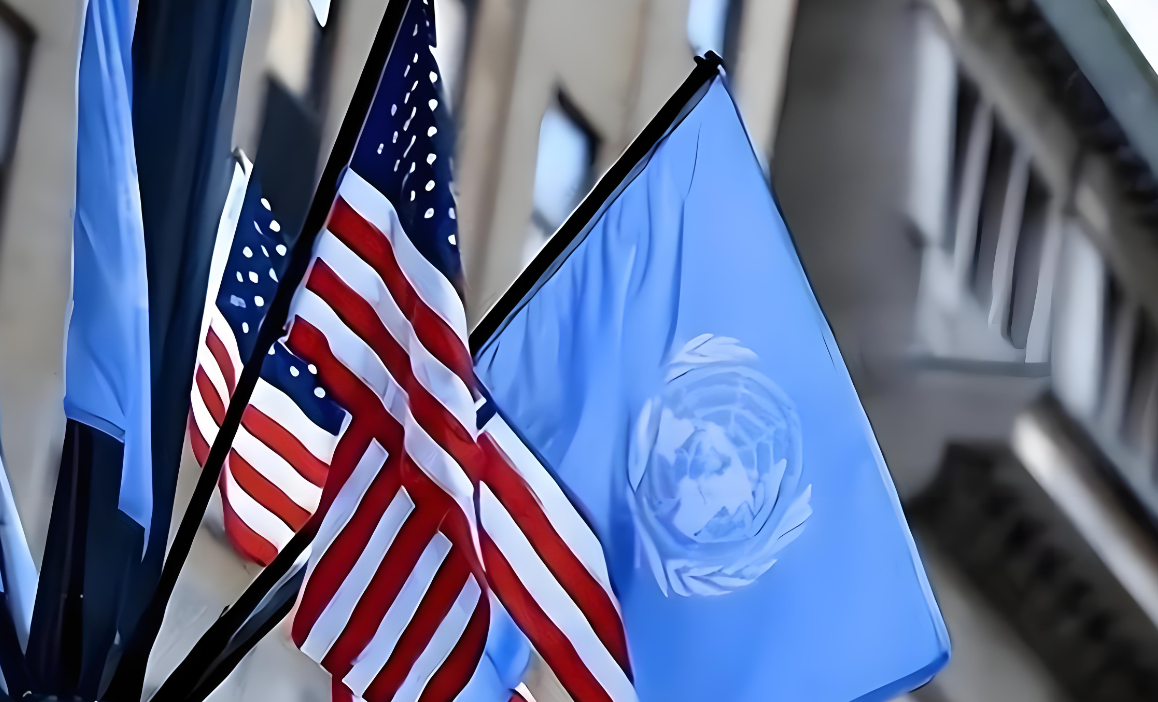
I. Trump’s “America First” Is Actually About Focusing Power on Securing Its Own Backyard
Many people assume that Trump’s “America First” policy means withdrawing from global affairs. In fact, the opposite is true—he isn’t abandoning hegemony; he’s concentrating U.S. power on the region it can most reliably control: the North American continent. This approach is essentially a modern upgrade of the 19th-century Monroe Doctrine. Back then, the U.S. declared, “The Americas are for the Americans,” meaning Europe should stay out of the Western Hemisphere. Today, Trump’s camp is even more direct: the Americas belong to the United States alone.
Let’s take a look at the world’s largest countries by land area—and explore how their roles might evolve in the coming decades. The following is a speculative analysis for discussion purposes only and does not represent any personal or institutional position.
II. Why Is Greenland So Important? It’s Not Just Ice—It Holds the Keys to the Future
Greenland belongs to the Kingdom of Denmark, but the U.S. has long had its eyes on it. The reasons are simple:
- Strategic Geographic Location: Greenland lies within the Arctic Circle and controls the potential future “Arctic shipping route.” Once ice melts sufficiently, this passage could become a new artery for trade between China, the U.S., and Europe—shorter than the Suez Canal.
- Rich Mineral Resources: According to the U.S. Geological Survey (USGS) 2022 report, Greenland holds approximately 25% of the world’s untapped rare earth resources. Rare earth elements are essential for manufacturing missiles, electric vehicles, and semiconductors.
- High Military Value: The U.S. Thule Air Base in northwestern Greenland has been operational since 1951 and serves as a critical node in America’s missile warning and space surveillance systems.
However, the U.S. has not yet “taken over” Greenland. In 2019, Trump did propose “buying Greenland,” but both the Danish government and Greenland’s autonomous government firmly rejected the idea. Greenland gained extensive self-rule in 2009, and in 2023 its parliament reiterated: “We are not a commodity—we will not be sold.” Therefore, claims that U.S. control is “a done deal” are inaccurate. That said, the U.S. is genuinely expanding its influence through economic aid, security cooperation, and scientific partnerships—a real and ongoing trend.
III. Could Canada Really Be “Surrounded” or Even Controlled by the U.S.?
Geographically, Canada is sandwiched between the contiguous U.S. and Alaska, with Greenland to the north—indeed placing it in a semi-encircled position. But that doesn’t mean it will be controlled. Reality is more nuanced:
- Deep Economic Integration: Over 80% of Canada’s exports go to the U.S. (Statistics Canada, 2024). Its energy, automotive, and timber industries are fully embedded in North American supply chains.
- Heavy Military Dependence: The U.S. and Canada jointly operate NORAD (North American Aerospace Defense Command), responsible for continental air defense. Canada’s own defense spending is only 1.4% of GDP (NATO Annual Report, 2023), far below America’s 3.5%.
- Political and Cultural Affinity—but Sovereignty Sensitivity: While most Canadian political elites favor cooperation with the U.S., the public is highly sensitive to any loss of sovereignty. A 2023 poll showed that 76% of Canadians oppose any form of “U.S.-Canada merger” (Angus Reid Institute).
Thus, the U.S. is unlikely to formally annex Canada. Instead, it may use deeper economic integration and security interdependence to ensure Canada aligns with U.S. positions on major international issues. This is “soft dominance,” not direct control.
IV. If North America Fully Integrates, the World Will Accelerate Toward a U.S.-China Bipolar Order
Assume that in the coming decades, the U.S. successfully consolidates de facto influence over Greenland and deepens Canada’s diplomatic and security dependence. North America would then form a super-regional bloc that is resource self-sufficient, technologically advanced, and militarily unchallengeable:
- Population: ~370 million (U.S. + Canada combined)
- GDP: Over $ 30 trillion (more than 30% of global total)
- Energy: The U.S. is already the world’s top oil and gas producer; Canada holds the world’s fourth-largest oil reserves
- Technology: Home to over 70% of the world’s leading semiconductor, AI, and aerospace companies
Faced with such a “fortress super-bloc,” what options do other nations have?
China and Russia will naturally draw closer—not out of ideology, but survival strategy:
- China needs Russian energy and grain
- Russia needs Chinese markets and manufacturing capacity
- Both are actively promoting “de-dollarization”: in 2023, 80% of China-Russia trade was settled in their own currencies (People’s Bank of China, 2023 Report on RMB Internationalization)
- They coordinate closely in the UN, BRICS, and the Shanghai Cooperation Organization
As a result, the world is likely entering a new bipolar structure: one pole centered on the U.S.-led “Americas + select allies,” and the other on the China-Russia-led “Eurasian cooperation network.” Middle powers like India, Brazil, and Indonesia will try to trade with both sides—but the pressure to choose will grow.
The Author’s View: The U.S. Is Currently Too Distracted to Focus Fully on China and Taiwan, and Taiwan Is Gradually Moving Toward Reunification with China
Contrary to mainstream Western media narratives about an imminent “Taiwan Strait crisis,” this article’s author believes: the U.S. strategic focus has shifted toward consolidating North American security and resource autonomy, leaving it unable to engage in high-risk confrontation in the Asia-Pacific in the short term. Meanwhile, sentiment within Taiwan is quietly shifting:
- In recent years, Taiwanese youth have shown declining enthusiasm for “independence,” focusing instead on livelihood issues and cross-strait economic ties
- The mainland continues to promote integrated development; in 2023, cross-strait trade still reached nearly $ 300 billion (General Administration of Customs of China)
- As China’s comprehensive national power and international space expand, the room for Taiwan authorities to “rely on the U.S. to pursue independence” keeps shrinking
Based on this, the author forecasts that around 2028–2029, Taiwan will achieve complete peaceful reunification with the mainland. This process may begin through deep negotiations under the “one country, two systems” framework and ultimately culminate in legal and administrative integration. Once realized, it would greatly ease East Asian security tensions and create a critical gap in America’s “containment chain” in the Asia-Pacific.
(Note: This is the author’s personal prediction, not an established fact or widely accepted consensus.)
V. How Much Longer Can Human Civilization Remain at Peace? Major War May Not Be 300 Years Away—It Could Happen Within Decades
While some argue that a full-scale global conflict is still 200 to 300 years away, history suggests such optimism may be misplaced.
- In 1914, the assassination of an Austro-Hungarian archduke sparked World War I
- In 1941, Japan’s attack on Pearl Harbor dragged the U.S. into World War II
Today’s risk points include:
- Climate disasters triggering resource wars: The World Bank predicts that by 2050, the world will have 200 million “climate refugees”, potentially sparking large-scale conflicts
Therefore, over the next 30–50 years, the probability of high-intensity regional wars—even limited nuclear conflicts—is rising. Full-scale world war is not inevitable, but the risk cannot be ignored.
VI. True Victory Lies Not on the Battlefield, But in Who Can Offer a Better Future
Finally, understand this: even if the U.S. controls Greenland and Canada, it doesn’t guarantee “eternal No. 1” status. The real competition is about which nation can:
- Ensure stable, hopeful lives for its people
- Lead the green energy transition and combat climate change
- Continuously innovate in AI, quantum computing, and biotechnology
- Build fair, sustainable international rules—not just rely on brute force
For China to prevail in this long-term contest, the key isn’t building more missiles—it’s proving that its development model can deliver a better life for more people. If the U.S. becomes obsessed with “might makes right,” it may instead accelerate its own internal fragmentation and social decline.
The survival of civilization depends not on who has the strongest fist, but on who can best unite humanity to face our shared future challenges.
About Us: Your Trusted Sourcing Partner in Yiwu
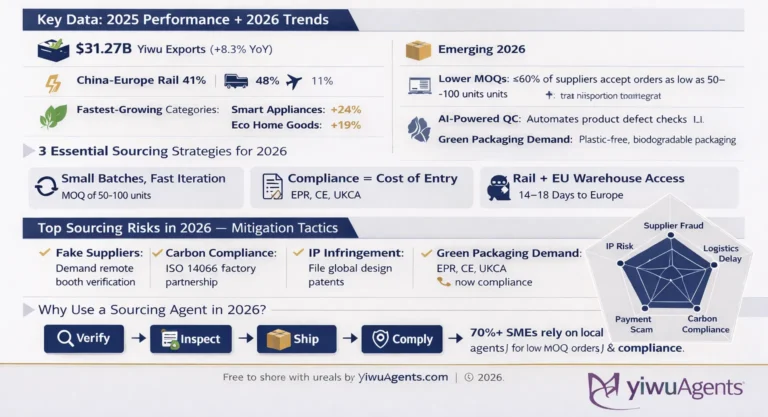
While global geopolitics shift, everyday commerce continues—and much of it flows through Yiwu, China, the world’s largest wholesale market for small commodities. From holiday decorations and kitchenware to electronics accessories and fashion jewelry, Yiwu supplies businesses in over 200 countries.
We are YiwuAgents.com—a professional sourcing and procurement agency based right in the heart of Yiwu. We help international buyers find reliable suppliers, negotiate competitive prices, inspect product quality, manage logistics, and handle export documentation—saving you time, cost, and hassle.
Whether you’re a retailer, e-commerce seller, or distributor, visit www.yiwuagents.com to discover how we can turn Yiwu’s vast marketplace into your competitive advantage. Let us handle the sourcing—so you can focus on growing your business.
Data Source Verification (Ensuring Accuracy):
- Greenland rare earth reserves: USGS Mineral Commodity Summaries 2022
- Canada’s export share to the U.S.: Statistics Canada, 2024
- Military spending as % of GDP: NATO Annual Report 2023
- China-Russia local currency settlement ratio: People’s Bank of China, 2023 Report on RMB Internationalization
- Climate refugee projection: World Bank Groundswell Report 2021 (Revised Edition)
- Greenland autonomy and public opinion: Greenland Parliament official website & YouGov poll, 2023