Geopolitical Shifts Post-Hormuz Opening: Deep Restructuring of Global Supply Chains and the Yiwu Trade Model
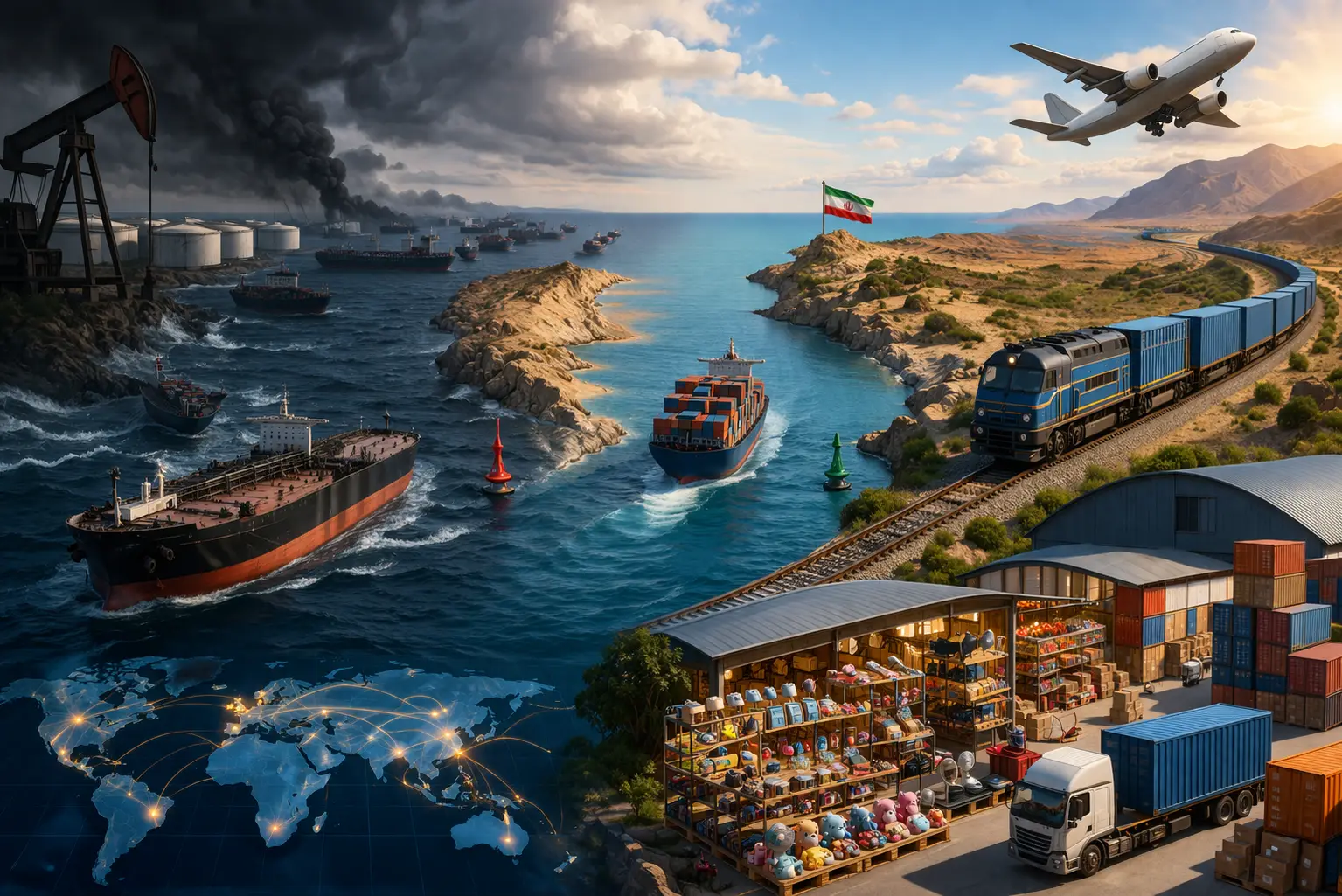
As the “Grand Artery” of global energy, the Strait of Hormuz dictates the pulse of international trade. This article delves into the complex situation of April 2026, analyzing the shift from “blockade” to “temporary opening.” We examine the chain reaction of this geopolitical event on global shipping costs, energy prices, and manufacturing supply chains over the next six months. Specifically, we analyze how the Yiwu small commodity trade can leverage its unique Cost-Effectiveness and Land Logistics Channels to build a procurement system more resilient than one reliant solely on maritime shipping.
1. Crisis Retrospective & Status Quo: From “Total Blockade” to “Conditional Breathing Room”
To understand the current trade environment, we must first clarify what has happened in the Strait of Hormuz over the past two months.
1.1 Background: The Darkest Hour of Late February
According to UNCTAD reports, since late February 2026, the Strait of Hormuz fell into a severe blockade crisis. As the chokepoint handling approximately 25% of global seaborne oil trade and 19% of LNG trade, its average daily vessel traffic plummeted from a normal 141 to just 3 vessels, a drop of 97%. This event caused Brent crude oil prices to skyrocket in the short term, global logistics costs to surge, and war risk insurance premiums to double.
1.2 Current Situation: April’s “Temporary Ceasefire” and “Toll Station Mode”
Fast forward to April 8, 2026, and the situation has taken a dramatic turn. The US and Iran reached a two-week temporary ceasefire agreement, causing market sentiment to turn optimistic and crude oil futures to dive. However, as procurement experts deeply rooted in the Yiwu market, we need to see the essence through the phenomenon: The strait has not fully restored free navigation.
The current “opening” is extremely fragile, characterized by:
- Approval System & “Technical Restrictions”: The Islamic Revolutionary Guard Corps (IRGC) has warned via broadcast that all vessels must obtain explicit permission to transit. This means passage is no longer a “right” but a “privilege” requiring application.
- “Dual Channels” & Toll Expectations: The strait is forming a northern channel controlled by Iran and a southern channel along the Oman coast. Although the Iranian ambassador to China stated no formal toll plan has been issued, the market widely expects a “Joint Management” model or standard tolls to be implemented.
- Low Traffic Volume: Despite a slight rebound in weekend traffic (10 ships on Saturday, 11 on Sunday), this is a far cry from the pre-war level of ~135 ships per day. Thousands of vessels remain on standby in the Persian Gulf.
2. 6-Month Forecast: Short-Term Dividends vs. Long-Term Hidden Troubles
Based on the timeline of April 9, 2026, we make the following predictions for the next 1 to 6 months, which will directly impact your procurement decisions.
2.1 Short-Term Prediction (1 Month): Emotional Release & Logistics Congestion
- “Fake Crash” in Oil & Freight: As news of the ceasefire spreads, the risk premium on energy prices will fall rapidly. However, this is temporary. Due to the massive backlog of goods from the past two months, “congestion navigation” will occur in the coming weeks.
- Costs Remain High: Although the strait is nominally open, insurance costs (War Risk) and the time cost of approvals remain. For European and Asian buyers needing urgent restocking, the uncertainty of sea freight remains extremely high.
2.2 Medium-Term Prediction (2-6 Months): Normalized Risk & “Toll Station” Structure
- Lag in Full Recovery (June-Sept): The IEA predicts it may take months for traffic to fully normalize, likely not until June-September 2026.
- Permanent Cost Increase: Even if the situation stabilizes, the Strait of Hormuz may enter a “Toll Station Mode.” This means the logistics cost for goods passing through will permanently increase.
- Structural Shift in Supply Chain: To avoid risks, more high-value or urgent goods will shift to the China-Europe Railway Express or Air Freight.
3. Supply Chain Restructuring: Resilience and Opportunities of the Yiwu Model
Against this backdrop, the global supply chain is shifting from “efficiency first” to “security first.” For the Yiwu small commodity trade, which relies on efficient logistics, this presents both challenges and massive opportunities.
3.1 The “Safe Haven” Effect of Yiwu Supply Chain
When sea freight is blocked and oil prices fluctuate, the High Cost Performance advantage of the Yiwu market becomes irreplaceable.
- Hedging Logistics Costs: The rise in sea freight and insurance premiums compresses profit margins. At this time, sourcing lower-priced yet reliable Yiwu goods becomes the best choice for buyers to balance total costs.
- Product Density & One-Stop Sourcing: Yiwu offers over 1.8 million SKUs. In times of logistics uncertainty, reducing shipment frequency while increasing category density per shipment (i.e., loading more varieties of high-value small commodities in one container) is a wise move.
3.2 Rise of Land Power: Strategic Value of the China-Europe Railway Express
This is the biggest advantage Yiwu holds over other coastal manufacturing bases.
- Bypassing Hormuz: The China-Europe Railway Express (Yiwu-Madrid/London, etc.) completely bypasses the Strait of Hormuz and is unaffected by the Red Sea crisis. In the next six months of turmoil, rail transport will be the most stable land artery connecting China and Europe.
- Balance of Time & Cost: Although rail freight is higher than sea, it is far lower than air freight, and the transit time (~15-20 days) is much faster than sea freight diverting around the Cape of Good Hope.
3.3 Customization to Combat Consumption Downgrade
Rising energy prices caused by geopolitics will eventually transmit to the consumer end, potentially leading to consumption downgrades in some markets. Yiwu factories’ strong OEM/ODM Capabilities allow for rapid adjustment of product materials and craftsmanship to provide “dupe” products, helping buyers maintain sales volume in an inflationary environment.
4. Optimizing Procurement Strategy: Practical Advice from Yiwu Agents
Facing the uncertainty of the next six months, we recommend the following strategies for global buyers:
4.1 Adopt a “Sea-Land Combination” Logistics Mix
Don’t put all your eggs in the sea freight basket.
- High Value/Urgent Goods: Strongly recommend shipping via China-Europe Railway Express.
- Low Value/Bulk Goods: Can wait for sea freight recovery but must reserve longer lead times.
4.2 Use the “Window Period” to Stock Up Early
April to June is the game period for the situation. We advise using the current “temporary ceasefire” window to speed up ordering and production. Do not wait until after June when the situation clarifies, as logistics costs may rise due to “normalized tolls.”
4.3 Strengthen the Role of Local Agents
In times of changing situations, information is money. A professional Yiwu Agent can help you monitor logistics dynamics in real-time, flexibly switch transport modes, and use local resources to lock in the most Cost-Effective factory capacity for you.
5. Conclusion
Although the “switch” of the Strait of Hormuz has been temporarily flipped to “On,” the geopolitical cracks behind it have not healed. The next six months will see global trade enter an adjustment period of “high cost, high risk.”
In this environment, Yiwu is not just a source of goods but a supply chain hub with (strong) adaptability. By using the China-Europe Railway Express to avoid sea freight risks and High Cost Performance products to hedge against inflation, global buyers can turn a crisis into an opportunity to seize the market. Yiwu Agents will continue to be your strongest backing, using our expertise and experience to help you navigate the turbulent seas of international trade.
Internal Links
- Explore Our Logistics Services: Want to know how to bypass Hormuz risks via the China-Europe Railway Express? Visit our page .
- Find Cost-Effective Products: In an inflationary environment, how to leverage Yiwu’s Cost-Effectiveness? Check here.
- Contact Us: Start your safe procurement journey, today.
Frequently Asked Questions (FAQs)
Q1: Is the Strait of Hormuz really open now? Can my goods go by sea?
A: Currently (April 9, 2026), it is in a “temporary ceasefire” status. The strait is technically open, but passage requires Iranian approval, and traffic volume is far from normal. Sea freight is an option, but it faces risks of delays and rising war risk premiums. We recommend sea freight for non-urgent goods and rail for urgent cargo.
Q2: Does the China-Europe Railway Express really bypass Hormuz risks?
A: Yes, completely. The China-Europe Railway Express departs from Yiwu, China, and travels via Kazakhstan, Russia, Belarus, and Poland to Europe. It is a land route that does not pass through Middle Eastern waters, making it one of the safest transport methods currently available.
Q3: Will oil prices and freight rates drop in the coming months?
A: In the short term (1 month), there might be a slight dip due to ceasefire news, but over the next 2-6 months, logistics costs are likely to remain high and volatile due to toll expectations and infrastructure repair lags.
Q4: What can a Yiwu Agent do to help me deal with these risks?
A: We can monitor logistics dynamics in real-time, assist you in switching from sea to rail transport, find more Cost-Effective suppliers to offset freight hikes, and provide strict Inspection Services to ensure your capital safety in remote procurement.
Q5: Is now a good time to place new orders?
A: Yes. The current “window period” is precious. We advise placing orders during this stability and trying to complete shipments before June to avoid potential summer shipping peaks and possible situation reversals.
Reference List
- United Nations Conference on Trade and Development. (2026, March 10). Strait of Hormuz disruption – Impact on global trade and development.
- International Energy Agency. (2026, April). Oil Market Report: Middle East Tensions.
- U.S. Energy Information Administration. (2024). World oil transit chokepoints.
- BBC News. (2026, April 8). US-Iran ceasefire: What it means for global oil.
- Reuters. (2026, April 9). Shipping rates fluctuate as Hormuz passage remains restricted.
- Yiwu Agents Internal Data. (2026). Q1 2026 Logistics Performance Review.